Suzi's Blog

Gravy Making Tips

Earlier this week I blogged Arrows Roast Turkey. I have a big bird in the oven now and is following that recipe to the letter. That recipe has gravy instructions which are terrific.

Still, many people feel rushed or overwhelmed by the time the turkey is out, carving is imminent and somehow perfect gravy has to be constructed. Do you lack gravy confidence?

Let me give you a bit more detail about gravy construction. I’ll try to make it easier to understand how easy is really is to make gravy that is truly lip smacking.

In a nutshell, here’s what you are going to do. You are going to make a roux — yes, just like in Cajun feasting — then add some flavored liquid, cook to allow it all to thicken, and eat. That’s all you have to do.

A roux? A roux is just a cooked mixture of fat and flour. By cooking the two ingredients you create a substance, the roux, that simply loves additional liquid. The cooked roux literally unwinds in the liquid and thickens it — my thanks to Alton Brown for the food science here.

There is one key secret: the roux is made in the same pan you roasted the turkey in. When you lift the turkey out, don’t dare clean that pan. Pour the liquid out into a measuring cup, or better yet one of those fat separator utensils.

With the liquid pour out, that roasting pan is literally littered with flavoring bits. They are the third, “secret” ingredient for you roux.

One last tip for you, when you make the roux, and are cooking the fat and flour, the longer you cook the darker and more flavorful the roux becomes. Cook for about 10 minutes and you have a “white roux.” Cook for 20 minutes or more and you have “brick” roux. White tastes fine. Brick will probably bring tears to your eyes. I made a brick roux once that I still remember, and have never been able to duplicate.

But there is a tradeoff. The longer you cook, the darker the roux becomes, the more flavor it will have, but the less thick gravy it will make. That over-the-top brick roux is only 25% as effective as a white roux at thickening. So, you need to ponder how much flavor you want versus how thick you want your gravy to become. And of course, as you cook the roux and it becomes darker, there is no way to “uncook it” to get back to a lighter color. Gravy making is a one way street.

This is the key reason why you can make gravy a hundred times and always end up something good but a tad unique. You haven’t failed. You’ve just been part of a chemistry experiment.

Let’s cook.

You will need:

  • Fat from the liquid you poured off: 1 tablespoon for each cup of gravy
  • Flour: 1-2 tablespoons for each tablespoon of fat
  • Flavored liquid, such as turkey stock: 1 cup for each tablespoon of fat

Decide on how much gravy you want. For each cup of gravy, use one tablespoon of the fat that is sitting in that measuring cup or separator you pour the pan juice in. Put the fat into your pan, turn heat to medium, and begin stirring.

You can begin to add flour. Here, you’ll find recipes differ substantially. Typically, it’s one tablespoon of flour for each tablespoon of fat you’ve already added. But other recipes will say a tablespoon and a half or even two tablespoons. More flour should give a thicker gravy. Regular AP flour is fine, but Alton Brown recommends cake or pastry flour!

Cook the fat and flour over medium heat, constantly stirring. If your roasting pan is large, you may want to place it over two burners and have both them going. Keep stirring until you reach the color you desire. When the mixture bubbles, you are “done.” If the roux is not yet at the color you want, lower the heat a bit, keep cooking to change the color and adjust the heat so that you do get to a bubbling liquid.

Now add your flavored liquid, one cup for each tablespoon of fat you added. In that measuring cup where you put the pan liquids, the fat has floated to the top and you’ve used some of that fat to start the roux. Pour off the rest of the fat, and use the liquid in the bottom of the cup as a starting point. You’ll need additional liquid. You could use water, but you shouldn’t. You want chicken or turkey stock.

Cook and stir. Slowly let the mixture come to a boil. It will have thickened along the way. Add salt and pepper to your personal taste.

Remove from the heat. Serve and savor.

Source: inspired by Holly Garrison in The Thanksgiving Cookbook and Alton Brown in I’m Just here for the Food.

Risotto with Smoked Salmon and Mascarpone

If I say “rice” your mind may immediately conjure up images of Chinese or other Asian cuisines. Rice is just not the first thing that pops into our Italy-means-only-pasta minds. But in the north of Italy, short grain rice is the staple and risotto — which literally means “little rice” — comes in an infinite variety of dishes. Risotto is cooked with broth, enriched with cheese of some sort, and then amplified with other ingredients: meat, fish, or vegetables. You may well have had spring risotto with asparagus tips beckoning your next bite.

It’s those different additions, in different proportions, that give you the opportunity for truly an unlimited number of risotto combinations.

Now, unlimited is the good news. Having a deadline to actually pick one recipe for an upcoming dinner party, well, that could have been a challenge. We have a shelf of Italian cookbooks, each one excellent and almost every one offering a chapter of risottos.

Given that deadline to pick one recipe, I cut the Gordian knot. Biba Caggiano is a fabulous chef, author, and TV personality based in Sacramento. Her cookbooks are staples, books that you can always depend on. So, I was scanning the recipes in Italy al Dente and found this header note: “If I have a dinner party at my house, this is the risotto I would choose.” That was just the advice I needed to end my search. Suzen read the recipe, agreed, and we were off to the store.

Was Biba right? Is this “The” risotto recipe? When I was served the dish, I took one bite, got up, and went for seconds. No one was going to beat me to having more.

This risotto, with its hint of smoky salmon and the bare sweetness of the mascarpone, is culinary paradise. It is a perfect dish. Not the just the ingredients, but the balance that is created in the flavors by the proportions Biba suggests.

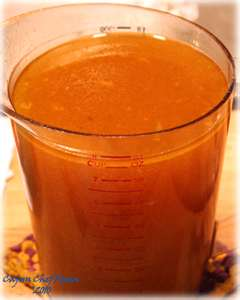
This risotto is very easy to make, and I’m sure you will enjoy it. Oh, the recipe calls for vegetable broth or canned chicken broth. Suzen made one modification here: we always make stock from left over feasts, so we used turkey stock we had made ourselves at Christmas.

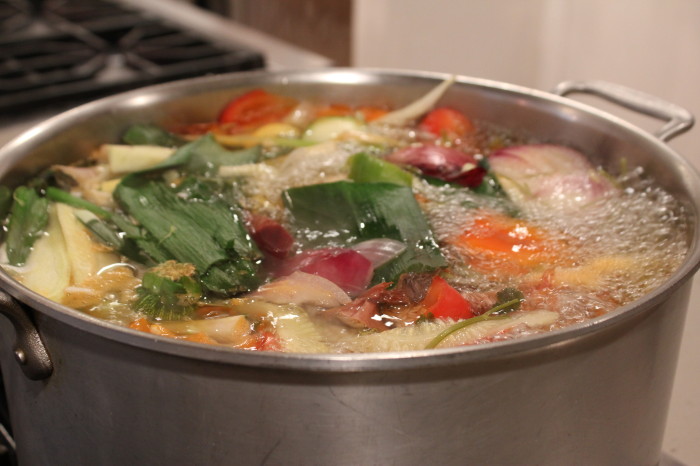
You can buy stock in nice metal cans, or you can make your own, using that free range turkey carcass, and fresh vegetables and just the seasonings you want. I’ll post some stock recipes in the fall when you’re more likely to be roasting whole birds. This stock is a secret to making a perfect risotto dish even more perfect. Yes, that may not be good logic or grammar, but culinarily “more perfect” is possible.

Risotto with Smoked Salmon and Mascarpone

Serves: 4 to 6

Ingredients:


6 cups vegetable broth or 3 cups canned chicken stock mixed with 3 cups of water
3 tablespoons unsalted butter
⅓ cup thoroughly washed leek, white part only
2 cups imported Arborio rice other rice for risotto
½ cup dry white wine [we used leftover white sparkling]
3 to 4 ounces smoked salmon, cut into thin strips
2 to 3 tablespoons mascarpone cheese
1 tablespoon chopped fresh parsley

Preparation:

Heat the broth in a medium saucepan and keep warm over low heat.

Heat the butter in a large skillet over medium heat. When the butter foams, add the leek and cook, stirring, until the leek is pale yellow and quite soft, 8 to 10 minutes. Add the rice and stir quickly for a minute or two until it is well coated with the butter. Add the wine and stir until the wine is almost reduced. Add ½ cup simmering broth or just enough to barely cover the rice. Cook, stirring, until the broth is absorbed almost completely. Continue cooking, adding broth and stirring the rice in this manner for another 16 to 17 minutes.

When the last addition of broth is almost all reduced, add the salmon and stir for a minute or two. Add the mascarpone and the parsley. Stir quickly until the cheese is melted and the rice is a moist, creamy consistency. Taste, adjust the seasoning, and serve.

Source: Italy al Dente by Biba Caggiano