Suzi's Blog
Salmon Baked in Tomato Confit Juice
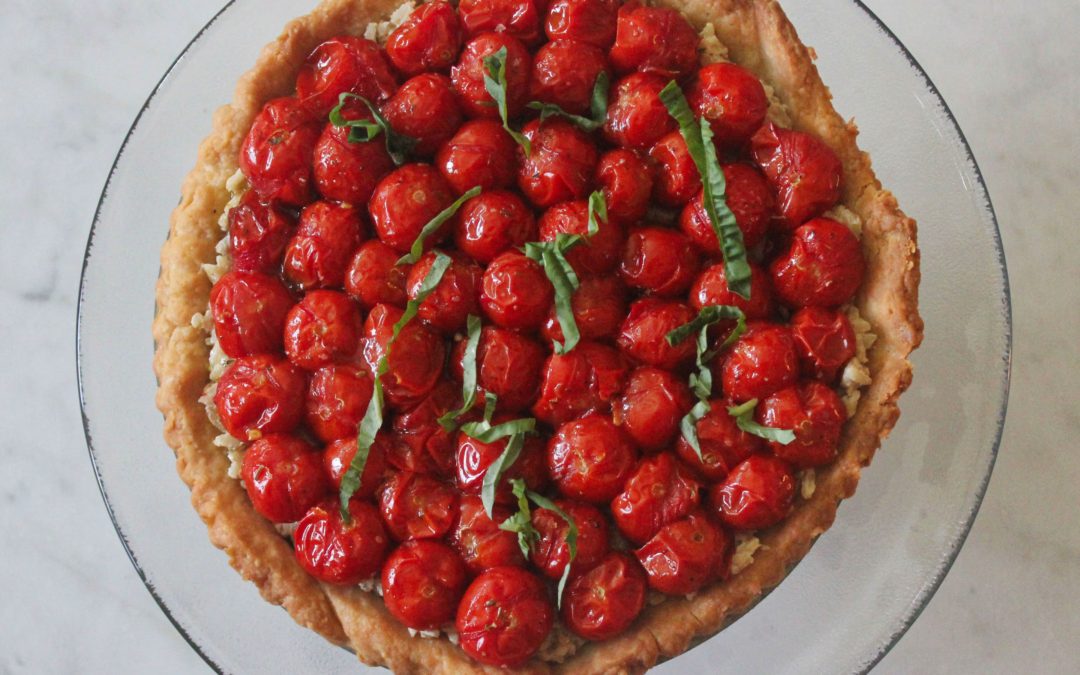
A few weeks ago we published a post for semi-confit tomatoes, a recipe that is repeated below. Once those tomatoes are done, don’t wash the pan. You have gold there. Olive oil scented with tomatoes, thyme, bay, and garlic. You could, of course, add some onion, too.
Take that pan, put in a hunk of salmon — the ideal fish but by no means the only one you might use. Bake at high heat, say 400 degrees, for about 10 minutes. The time will depend on how well done you want the fish and, of course, the thickness. For dinner, you now have the fish and the tomatoes.
Only the white wine remains.
Semi-Confit Tomatoes
Yield: about 1 ½ pounds
Ingredients:
- 4 cups light olive oil
- 2 ¼ pounds ripe cherry or medium tomatoes
- 2 thyme sprigs
- 1 bay leaf
- 2 garlic cloves, halved
- 1 tablespoon white peppercorns, coarsely crushed
Preparation:
Heat the olive oil in a pan and add the whole, unpeeled tomatoes, thyme, bay leaf, garlic, and crushed pepper.Cook gently at about 160⁰F for 5 to 10 minutes. The riper and the smaller the tomatoes, the less time they will take to confit.Let them cool in the pan, then transfer them to a jar or bowl and pour over the oil. Cover with plastic wrap and refrigerate until ready to use. The semi-confit tomatoes will keep well in their oil for at least 2 weeks in an airtight container in the refrigerator. Just season them with salt and pepper before using.
Source: Pastry by Michel Roux
.
Garlic Confit
The recipe for roast lamb in How to Roast a Lamb is perfectly delicious — as I described in an earlier blog. Given the book title, you would think the author, Michael Psilakis, would consider the lamb the most important recipe in his striking book. But it is one of the ingredients for that lamb that he emphasizes is the mother lode of his book: garlic confit.
If I say “confit” you might reply “duck.” A meat confit is made by cooking meat in its own fat and then preserving it in that fat. But confits come in many forms, for multiple purposes. Other confits can be used as garnish and are made by cooking vegetables, and even fruits, in a seasoned liquid. This garlic confit is an example of this other confit type.
Garlic confit can be used directly, as in the recipe for the roast lamb that calls for 15 cloves of garlic confit. Or you can use this confit as a puree: simply take a large spoonful of the confit out of the jar, allow the oil to drain away, and then chop the cloves. But, be sure to save that drained oil and return it to the jar. The puree can be substituted for butter in any cooking process, for example, to finish and emulsify pan sauces.
The garlic confit are soft and subtle. Any recipe that calls for garlic cloves will become more sophisticated by using confit cloves. And, very importantly, this recipe doubles down. The confit oil is ideal for vinaigrettes or just to drizzle over a finished dish.
The instructions below emphasize following sanitary procedures when storing and using the confit. That’s important: contamination can occur too easily and can be rough on your tummy. Just follow the guidelines below, and you will have an important, versatile addition to your kitchen.
Oh, yes, this recipe calls for a lot of peeled garlic cloves. Look in the produce section of your market for large — a pint to a quart size — jars of peeled garlic cloves. The price can be excellent and you’ll be spared the labor of peeling all those cloves.
Finally, here’s the link to that roast lamb recipe:
http://www.cookingbythebook.com/blog/recipes/roast-leg-lamb/
Garlic Confit
Yield: 2 cups
Ingredients:
3 cups garlic cloves, peeled
1 fresh bay leaf or 2 dried leaves
8 to 10 sprigs fresh thyme
Kosher salt and whole black peppercorns
About 2 cups, as needed, blended oil: 50% canola, 50% extra-virgin olive oil
Preparation:
Put the garlic cloves in a heavy, covered braising pan or Dutch oven. Add the bay leaf and thyme, a scant tablespoon kosher salt, and 15 to 20 peppercorns. Barely cover with the oil.
Cover the pan and braise — that’s why you barely covered with oil — in a 300° F oven until the cloves are pale golden and very tender, about 1 hour to 1 hour and 15 minutes. Cool to room temperature.
Transfer the garlic and all of the oil to a sterilized jar. Press a square of plastic wrap down directly onto the surface of the oil. Place another square of plastic over the rim of the jar and twist on the lid or secure with a rubber band. With every use, replace the square of the plastic that touches the oil and use a perfectly clean fork or tongs each time to prevent cross-contamination from other surfaces in your kitchen. As long as the cloves are covered with oil, they will last for at least 3 weeks in the refrigerator.
Source: How to Roast a Lamb by Michael Psilakis