Suzi's Blog
Elderflower Collins
“Of all the gin joints in all the towns in all the world …” Some actor named Bogart said that line in some movie. Decades ago. Gin had a lowly reputation then, but life changes.
Lately upscale gins are being produced, primarily in England where most gin is generated. [Alliteration is unintentional].
Why was gin looked down on? Why is it considered, by some, to be “merely vodka” with a dash of flavor?
Gin has a long, long history. Italian monks began flavoring distilled spirits in the 11th century. It was offered as an attempt to cure the Black Plague. That was an early marketing mistake.
By the late 17th century, what we would consider gin was in great production by the Dutch — 400 distillers in Amsterdam alone. Besides juniper berries, flavorings had expanded to include anise, caraway, coriander and all sorts of spices. [Over 100 spices and herbs are used today by all the various gin distillers.] Each distiller created his own combination, or sought to clone those of a more successful rival.
When William of Orange, ruler of the Dutch Republic, became king of England, the gin culture came across the Channel. And, there was government incentive. There was a tax on all imported spirits, but none on gin. Gin distillers and drinking establishments figuratively exploded. Of 15,000 drinking spots in London, more than half were devoted to gin. Some of it was good. Some was made with turpentine. Bad gin has been suggested for a “stabilization” of the population of London, which had grown to be one of the largest cities in the world and by far the largest city in Europe. So the phrase “gin joints” evolved. And never went away. During prohibition in the United States, folks created “bathtub gin” which only can conjure up hopes of a well-scrubbed tub.
Through it all, gin has survived. A gin and tonic [2/3 tonic water and 1/3 gin capped with a sprig of lime] is still a signature beverage that is instantly recognized and readily loved. But today, bartenders, mixologists, and marketing specialists have evolved all sorts of new gin drinks that take careful advantage of this key fact: gin is a delicate spirit that readily combines with and expands the flavor components of other ingredients.
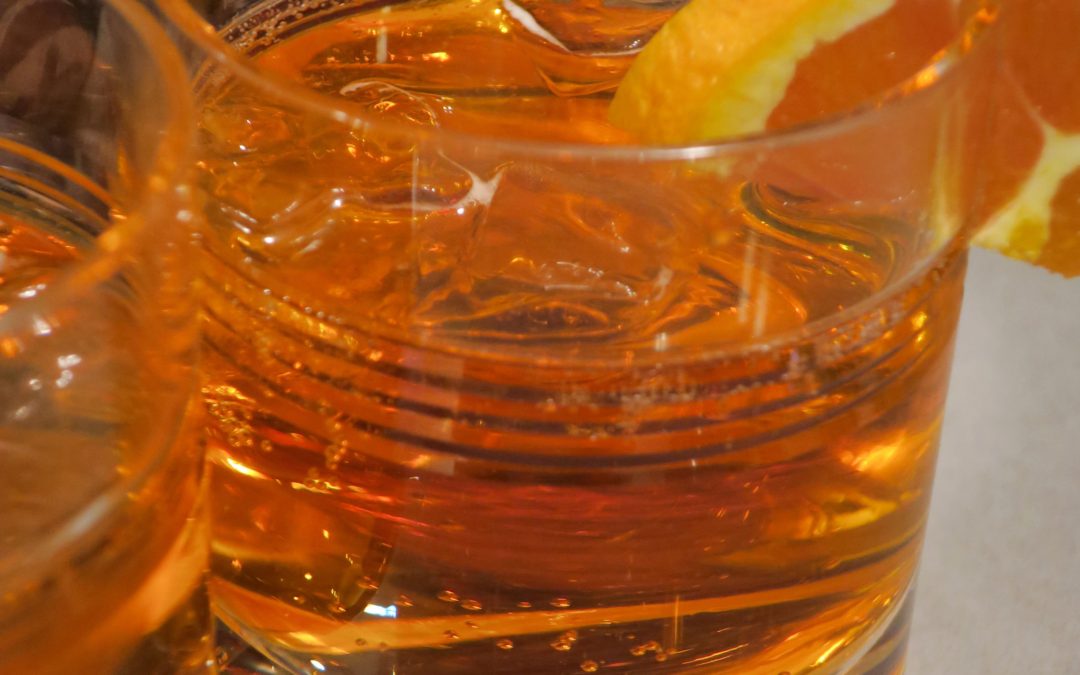
I made this cocktail for Suzen this weekend. She’s a gin lover and a gin and tonic will put a smile on her face no matter what. Here, it’s not tonic water but lemon juice, sugar syrup, and St. Germain that made her beam. St. Germain is the elderflower liqueur that, in less than a decade, has become a favorite ingredient and spawned thousands of drinks. This one is very good.
The original recipe call for half the ingredients I have here. The 12-ounce glass was to be topped off with club soda. Suzen and I both love our cocktails with a kick. So, to fill the glass, I doubled the recipe and avoided the soda. The little space left at the top was filled with crushed ice. I do believe my alterations made her smile wider.
Elderflower Collins
Yield: 1 very large cocktail
Ingredients:
- 4 ounces of high quality gin
- 2 ounces of freshly squeezed lemon juice
- 1 ounce of sugar syrup
- 1 ounce of elderflower liqueur [St. Germain]
Glass Choice:
- 1 12-ounce Collins or sling glass
Preparation:
Add the gin, lemon juice, sugar syrup and liqueur into a cocktail shaker filled with ice. Shake until quite cold.
Pour into the Collins glass and add crushed ice to fill. Garnish with a slice of cucumber.
Source: Bartending by Adam Freeth
Prickly Pear Lemonade and Sparkling Alternative
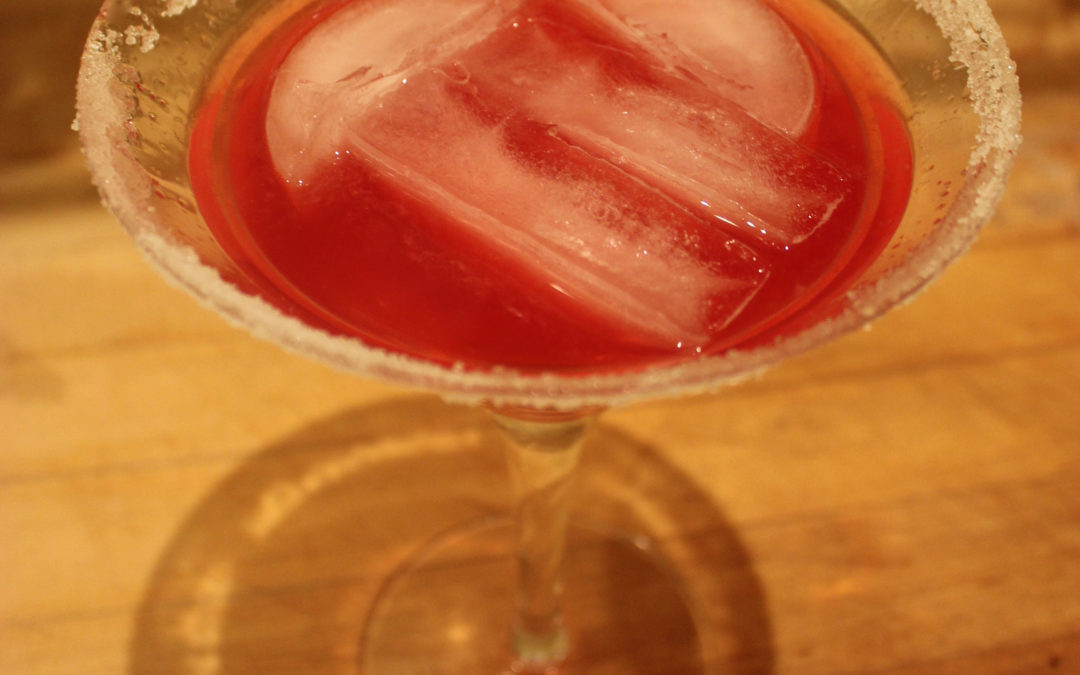
Recent posts here have covered prickly pears, prickly pear syrup, and, most certainly, prickly pear margaritas.
Does the syrup end there? No, you can put it on pancakes or waffles. Drizzle it on pound cake and ice cream.
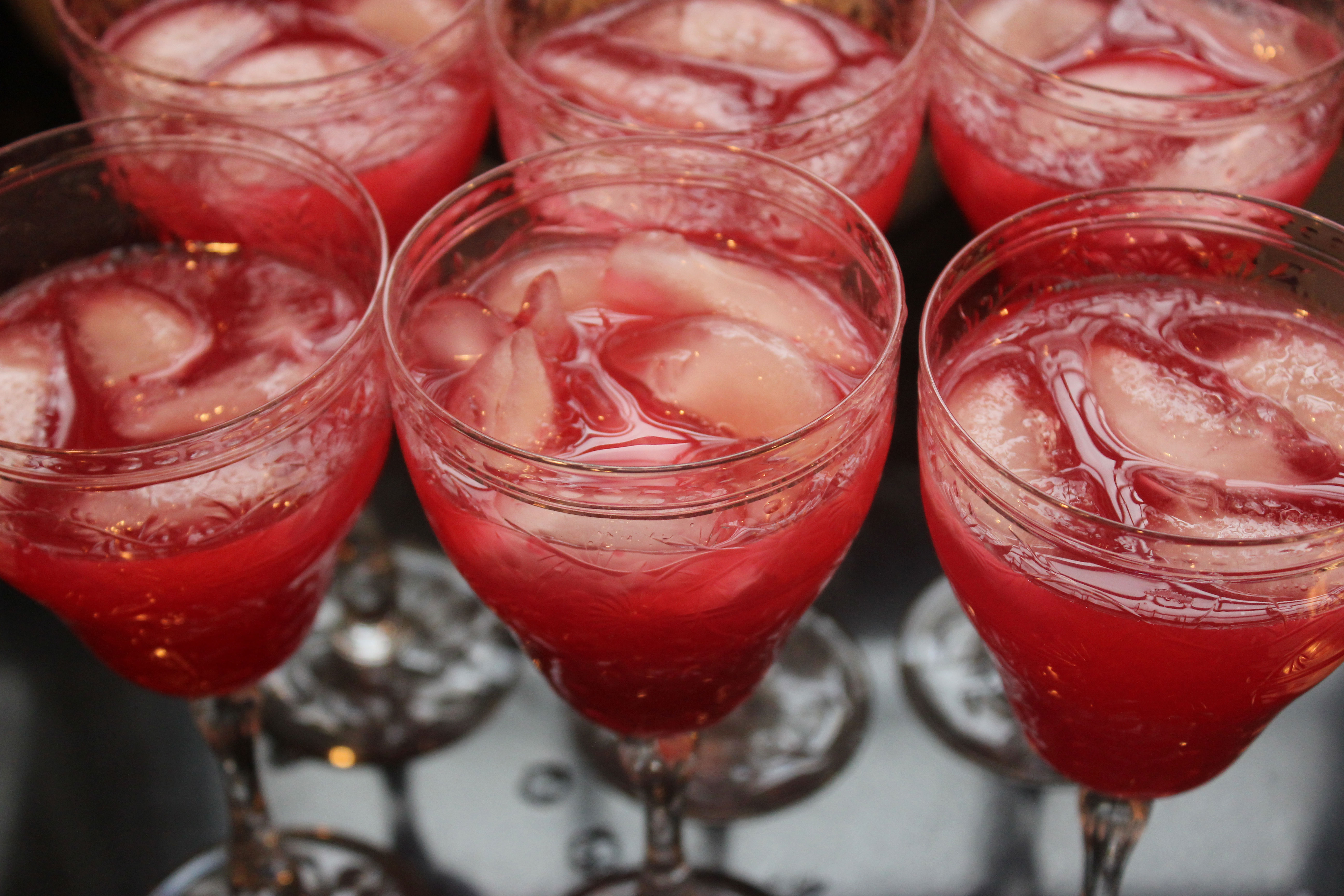
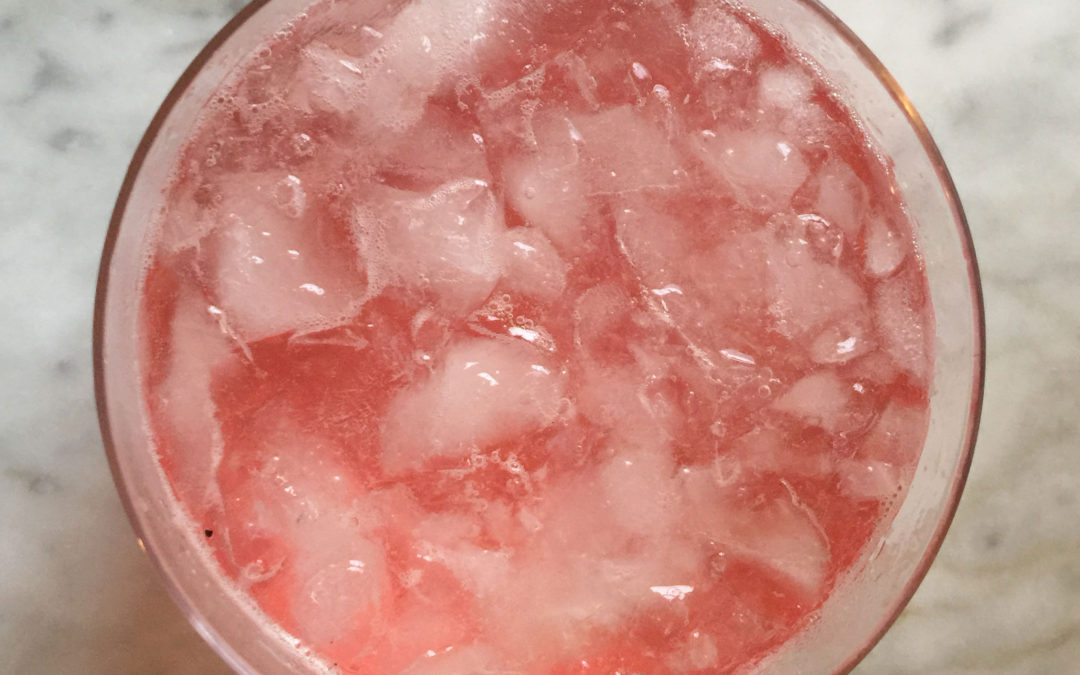
But wait. There’s still plenty of beverage mileage for this glorious pink liquid. You can make a prickly pear lemonade, pictured above. Or, you can combine that lemonade with sparkling wine. Try half prickly pear lemonade and half brut Proseco. Brut? From me with a sweet tooth that is enormous and never filled?
Yes, brut. The lemonade is nice and sweet unto itself. There no need to make life sweeter and, in truth, the brute force of the brut Proseco is a lovely contrast.
Prickly Pear Lemonade
Yield: just under a quart
Ingredients:
- 8 ounces freshly squeezed lemon juice [about 4 lemons]
- ½ cup sugar
- ¼ cup prickly pear syrup [see this blog for a recipe]
- 2 cups of water
Preparation:
Combine the lemon juice and sugar in a pitcher. Stir to mix into a thick liquid. Add the syrup and water and stir to mix evenly. Serve over ice and garnish with a lemon slice.
Source: inspired by desertusa.com